


24 Apr Te Reo Māori Made Simple: A Smarter Way to Learn Online in New Zealand
Te Reo Māori Made Simple: An Empowering Guide to Learning the Māori Language Step by Step
Building confidence in Te Reo Māori begins with a clear, structured approach that connects the basics of the Māori language with real understanding. For everyday learners of the Māori language, the journey often starts with simple kupu, pronunciation, and a desire to adopt the language easily, yet it quickly becomes something far more meaningful. Learning the Māori language is not just about translation; it is about understanding how language reflects identity, knowledge, and whānaungatanga. With the right guide to learning the Māori language, learners can take control of their learning in a way that feels natural, effective, and aligned with their own reo journey.
Strong progress comes from consistency and access to a complete and accessible guide that connects the dots between theory and practice. Whether through a workbook series, teaching resources, or structured language learning, committing just 30 minutes a day can produce lasting results over time. This approach proves that learning the language can be both practical and enjoyable, especially for anyone wanting to learn the basics in an empowering way. For those ready to move forward with clarity and confidence, learn Te Reo Māori through a structured pathway with Reo Ora and take the next step in developing real fluency.
Te Reo Māori Made Simple for Everyday Learners — Workbooks, Courses & Complete Guide
Review: Are “Reo Ora Online Māori Courses” still the best resource for learners of the Māori language?
For many learners of the Māori language, finding a resource that balances structure, flexibility, and cultural depth is essential. A modern approach to language learning needs to go beyond static material and offer a complete and accessible guide that supports pronunciation, understanding, and real-world use. Compared to traditional Māori made easy books or standalone workbook series, structured online learning environments provide a clearer pathway, helping everyday learners of the Māori language build confidence step by step. This is particularly valuable for anyone wanting to learn the basics while also progressing towards more advanced understanding.
What sets a strong learning platform apart is its ability to connect the dots between theory and application. Courses that incorporate teaching resources, kupu development, and practical exercises allow learners to take control of their learning in an effective and engaging way. This approach proves that learning the language can be both structured and enjoyable, especially when supported by a one-stop resource for anyone wanting consistent progress. Those exploring online Māori courses often find that combining guided lessons with independent practice leads to more sustainable outcomes than relying solely on books or isolated materials.
How does Rapata Wiri and Reo Ora compare to traditional Māori made easy books and workbook series?
A key distinction between traditional learning tools and modern methods lies in how knowledge is delivered and reinforced. While some Māori workbook formats online provide a solid foundation, they often rely heavily on self-direction without the added benefit of interactive guidance. In contrast, approaches influenced by reo Māori advocate Rapata Wiri place a strong emphasis on learning in an empowering way, where learners engage with the Māori language through structured progression and meaningful context. This aligns with broader principles of ako and knowledge and education, ensuring that learners are not simply memorising words, but understanding how language functions within culture.
A more integrated system supports learners through a combination of workbook kete, teaching resources, and guided instruction, making it easier to adopt the language easily over time. Rapata Wiri’s background, including involvement in programmes like Te Karere and Marae, alongside contributions to Māori student and community engagement, reflects a commitment to making language learning accessible and effective. As a result, learners benefit from a method that goes beyond translation and builds real capability, strengthening both pronunciation and comprehension across the Māori language family.
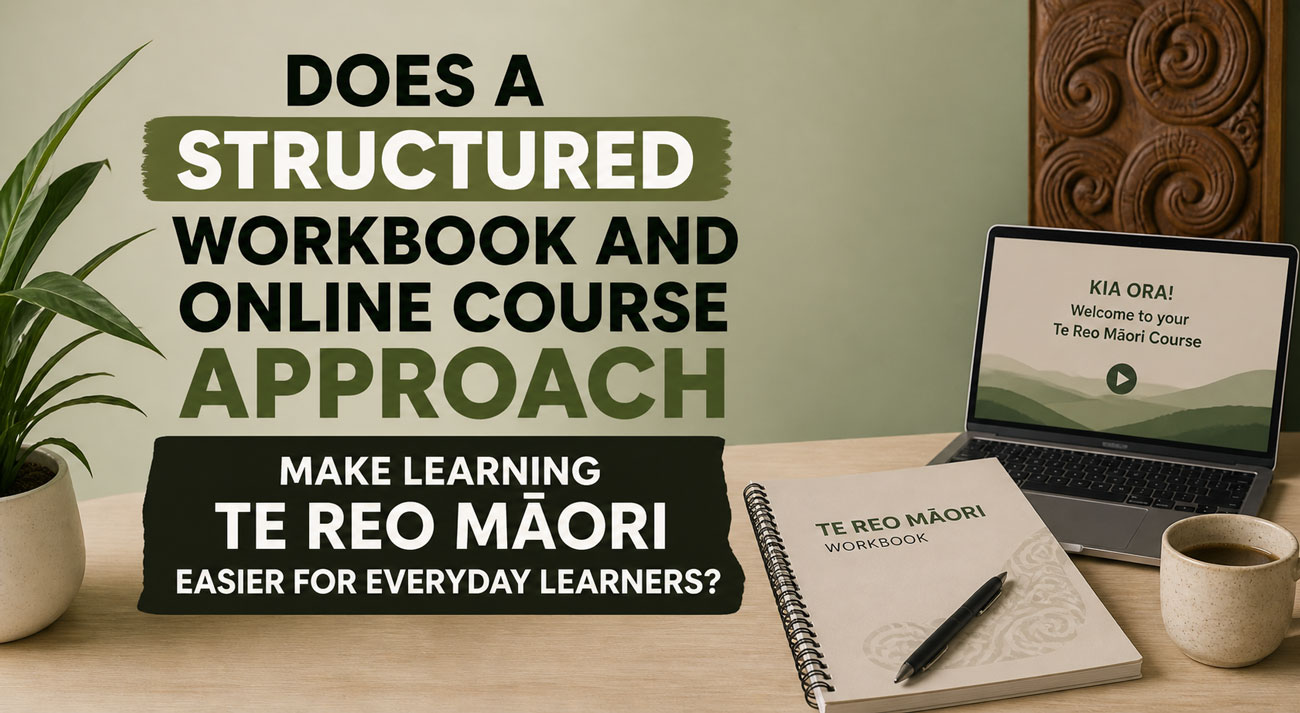
Does a structured workbook and online course approach make learning Te Reo Māori easier for everyday learners?
Combining a workbook series with a structured online course creates a balanced approach that supports different learning styles. For everyday learners, this method allows for flexibility while maintaining consistency, which is essential for long-term progress. A well-designed workbook provides a space to practise kupu, refine pronunciation, and reinforce key concepts, while online lessons guide learners through a clear reo journey. This dual approach is particularly effective for those committing just 30 minutes a day, as it allows for focused learning without becoming overwhelming.
Over time, this structure becomes a powerful resource for anyone wanting to build confidence and fluency. Language can be fun when learners feel supported and can see measurable progress, especially when working through a system that is both practical and engaging. By combining the strengths of traditional workbook methods with modern teaching resources, learners are better equipped to take control of their learning and develop lasting skills in Te Reo Māori.
Rapata Wiri: The Te Reo Māori Advocate Behind an Empowering Way to Learn
Who is Rapata Wiri and why trust his guide to learning the Māori language?
Rapata Wiri is widely recognised as a leading reo Māori advocate whose work has helped reshape how learners approach Te Reo Māori in a modern context. With a strong foundation in knowledge and education, his approach is grounded in making the Māori language accessible for anyone wanting to learn, from complete beginners to more advanced speakers. His methods focus on simplifying the basics of the Māori language while still preserving depth, allowing learners of the Māori language to build confidence without feeling overwhelmed. This balance is what makes his guide to learning the Māori language both practical and effective.
His credibility is further strengthened through academic and professional contributions, including roles linked to teaching, research, and Māori student and community engagement. As someone working towards his PhD and contributing to knowledge development, Rapata Wiri brings a structured, evidence-based perspective to language learning. His work reflects principles of ako, where teaching and learning are reciprocal, creating an environment where everyday learners can take control of their learning and progress in a way that feels natural and sustainable.
How does Reo Māori advocate Rapata Wiri prove that learning the language can be simple, effective and engaging?
A key strength in Rapata Wiri’s approach lies in demonstrating that learning Te Reo Māori does not need to be complicated or intimidating. By breaking language learning into manageable steps, he proves that learning the language can be simple, even for those starting with no prior knowledge. His methods encourage learners to adopt the language easily through consistent practice, clear pronunciation guidance, and structured progression. This aligns with the idea that language can be fun when learners are given the right tools and support to succeed.
What makes this approach particularly engaging is the way it connects the dots between kupu, context, and real-world use. Rather than focusing solely on translation, learners are encouraged to understand how the Māori language functions within everyday communication. This creates a more immersive reo journey, where learners develop both skill and confidence. With an emphasis on committing just 30 minutes a day, the process becomes achievable for everyday learners of the Māori language, allowing steady progress without unnecessary pressure.
From Ngāti Whakaue roots to education leadership: How his work in programmes like Te Karere and Marae shaped a complete and accessible guide
Rapata Wiri’s background, including his connection to Ngāti Whakaue, plays a significant role in shaping his perspective on Te Reo Māori and its importance within society. His involvement in current affairs programmes such as Te Karere and Marae has provided valuable insight into how language is used in real-world settings, reinforcing the idea that language learning should reflect authentic communication. These experiences have contributed to the development of a complete and accessible guide that supports learners in understanding both language and culture.
His work in education, including roles associated with adjunct professor responsibilities and leadership in teaching environments, further highlights his commitment to creating effective learning pathways. This combination of cultural grounding and academic expertise ensures that learners receive a well-rounded experience, supported by ngā rauemi whakaako and structured teaching resources. Those exploring about Reo Ora will find that this approach is designed to support long-term development, helping learners build strong foundations in Te Reo Māori while staying connected to its cultural significance.
Māori Made Easy – Workbook & Online Learning: A One-Stop Resource for Anyone Wanting to Learn
How does the Reo Ora Māori online course and – workbook structure help learners take control of their learning?
A structured combination of online learning and workbook support gives learners of the Māori language a clear and manageable pathway to follow. Rather than relying on scattered teaching resources, this approach provides a complete and accessible guide that connects the basics of the Māori language with practical application. By working through lessons alongside a workbook kete, learners are able to reinforce kupu, improve pronunciation, and steadily build confidence. This makes it easier for anyone wanting to learn to adopt the language easily while maintaining consistency in their reo journey.
What strengthens this structure is the balance between guided learning and independent practice. Online lessons introduce concepts in a logical sequence, while workbook exercises allow learners to engage more deeply with the material. Over time, this enables everyday learners to take control of their learning and develop skills at their own pace. Committing just 30 minutes a day creates a rhythm that supports steady progress, making language learning feel both achievable and effective for long-term development.
Are the Pukapuka Mahi workbooks enough, or does a combined workbook + online system connect the dots better?
Pukapuka Mahi workbooks offer a valuable starting point for those wanting to learn the basics, particularly when it comes to practising kupu, sentence structure, and translation. These resources are often seen as a series that is the ultimate resource for reinforcing foundational knowledge. However, for many learners of the Māori language, relying solely on a workbook can feel limiting, as it may lack the interactive guidance needed to fully understand pronunciation and context. This is where a broader guide to learning the Māori language becomes essential.
A combined workbook and online system helps connect the dots in a way that standalone adult books cannot always achieve. With access to structured lessons, learners can hear correct pronunciation, understand how the Māori language functions in conversation, and apply knowledge in real scenarios. This integrated method proves that learning the language can be more engaging and effective, particularly for everyday learners of the Māori who benefit from both visual and practical learning styles. It creates a more complete reo journey that supports both understanding and confidence.
How Reo Ora’s complete and accessible guide helps learners adopt the language easily and improve pronunciation
A well-designed learning system focuses not only on vocabulary but also on how language is spoken and understood in everyday contexts. For learners of the Māori language, improving pronunciation is often one of the most important yet challenging aspects. By incorporating ngā rauemi whakaako such as audio guidance, structured lessons, and targeted exercises, learners can develop a more accurate understanding of how Te Reo Māori sounds and flows. This makes it easier to adopt the language easily and use it with confidence in real situations.
Over time, this approach supports a deeper connection to the Māori language family, allowing learners to move beyond basic translation and into meaningful communication. Resources that focus on both spoken and written forms create a more balanced learning experience, helping learners refine their skills across all areas. Those exploring Māori language books alongside structured learning often find that combining these tools enhances retention and clarity. With consistent practice and the right support, learners can build strong pronunciation habits that carry through every stage of their language learning journey.
Learning the Māori Language: Basics Every Beginner Needs to Start with Confidence
What are the basics of the Māori language for anyone wanting to learn Te Reo Māori today?
Understanding the basics of the Māori language begins with building a strong foundation in pronunciation, sentence structure, and commonly used kupu. For learners of the Māori language, this early stage is where clarity and confidence are developed. Focusing on correct pronunciation ensures that words are not only recognised but spoken accurately, which is essential for real communication. Learning simple sentence patterns and everyday phrases helps learners adopt the language easily while reinforcing how Te Reo Māori flows naturally. This creates a more engaging reo journey, where learners are not just memorising but actively using the language.
Progress becomes more consistent when these basics are approached through a clear and accessible guide to learning. Developing familiarity with the Māori language family, alongside key cultural concepts such as whānaungatanga and ako, strengthens understanding beyond vocabulary alone. This approach connects the dots between language and meaning, allowing everyday learners to build a more complete understanding. With steady practice and the right teaching resources, beginners can take control of their learning and move forward with confidence.
Which dictionaries list words, tools, and resources support a strong foundation alongside a workbook kete?
Building a strong foundation in Te Reo Māori often involves combining multiple learning tools that reinforce understanding from different angles. Dictionaries that list words provide essential support for translation and vocabulary expansion, allowing learners to explore kupu in greater depth. When paired with a workbook kete, these resources create a structured system where learners can practise, revisit, and strengthen their knowledge. This combination is particularly useful for anyone wanting to learn the basics while also progressing towards more advanced comprehension.
A well-rounded approach also includes ngā rauemi whakaako such as teaching resources, guided exercises, and structured materials that support language learning in a practical way. Using a workbook series alongside these tools ensures that learners are consistently applying what they have learned. For those exploring how to learn Te Reo Māori, it becomes clear that combining resources creates a more effective and engaging pathway. This method supports long-term retention and helps learners develop both confidence and fluency.
How committing just 30 minutes a day for 30 weeks can transform beginners into confident speakers
Consistency is one of the most powerful factors in language learning, and committing just 30 minutes a day can lead to significant progress over time. For everyday learners of the Māori language, this manageable approach removes the pressure often associated with learning something new. Instead of overwhelming study sessions, short and focused practice allows learners to build skills gradually. Over a period such as 30 weeks, this consistent effort strengthens pronunciation, expands vocabulary, and improves overall fluency in Te Reo Māori.
What makes this approach effective is its simplicity and sustainability. Language can be fun when learners feel in control and can see measurable improvement in their reo journey. By integrating daily practice with structured learning methods, learners are able to reinforce knowledge and apply it in meaningful ways. This steady progression proves that learning the language does not require drastic time commitments, but rather a consistent and focused approach that supports long-term development.
Everyday Learners of the Māori Language: Building Real Progress in Just 30 Minutes a Day
How everyday learners can fit Te Reo study into busy lives across New Zealand
Balancing language learning with daily responsibilities can feel challenging, yet Te Reo Māori is uniquely suited to flexible, practical study. Everyday learners of the Māori language often find success by integrating short learning sessions into existing routines rather than setting aside large blocks of time. Simple actions such as revisiting kupu during a commute, practising pronunciation while completing daily tasks, or working through a workbook kete in the evening can make a noticeable difference. This approach allows learners to adopt the language easily while maintaining consistency, which is essential for long-term progress.
Small, focused efforts build momentum over time. Committing just 30 minutes a day transforms language learning into a manageable habit rather than an overwhelming goal. This steady rhythm supports learners in reinforcing the basics of the Māori language while gradually expanding their knowledge. By approaching learning in an empowering way, individuals can take control of their learning without disrupting their daily schedules, creating a sustainable and effective reo journey.
What daily habits help learners of the Māori language stay consistent and make real progress
Consistency is built through simple, repeatable habits that reinforce understanding and confidence. For learners of the Māori language, this often begins with daily exposure to kupu, sentence structures, and pronunciation. Using a workbook series or structured teaching resources helps learners stay focused, while revisiting previous lessons ensures that knowledge is retained. Language learning becomes more effective when learners actively engage with material, whether through writing, speaking, or listening exercises that strengthen their connection to Te Reo Māori.
Over time, these habits begin to connect the dots between vocabulary and real-world use. Learners who regularly practise are more likely to notice improvements in both comprehension and fluency. Language can be fun when progress is visible, and maintaining a consistent routine supports that sense of achievement. By keeping learning sessions short and purposeful, everyday learners can continue developing their skills without losing motivation, making steady progress across their reo journey.
How Reo Ora empowers everyday learners to take control of their learning in an engaging, effective way
An effective learning system provides both structure and flexibility, allowing learners to progress at their own pace while staying aligned with clear goals. Reo Ora supports everyday learners by offering a complete and accessible guide that combines practical teaching resources with structured learning pathways. This enables learners to take control of their learning, reinforcing key concepts while building confidence in pronunciation and comprehension. With a focus on clarity and progression, learners are able to move beyond the basics and develop a deeper understanding of the Māori language.
A strong emphasis on engagement ensures that learning remains both effective and enjoyable. Resources that support language learning, including guided exercises and structured lessons, help learners stay motivated while improving their skills. Those exploring everyday use of Te Reo Māori often find that this approach creates a more natural connection to the language. By combining consistency with a clear framework, learners are able to strengthen their abilities and build lasting confidence in their reo journey.
Key Points & Takeaways
Building confidence in Te Reo Māori comes down to clarity, consistency, and using the right approach from the beginning. For learners of the Māori language, understanding the basics of the Māori language—such as pronunciation, sentence structure, and core kupu—creates a strong platform for long-term progress. A well-structured guide to learning the Māori language helps connect the dots between theory and real-world use, allowing everyday learners to adopt the language easily and develop practical communication skills. Whether supported by a workbook kete, teaching resources, or a structured pathway, learning in an empowering way ensures that progress feels achievable and effective over time.
Taking the next step requires commitment and the right support system. Committing just 30 minutes a day can transform your reo journey, helping you take control of your learning while building confidence at a steady pace. For anyone wanting to learn Te Reo Māori in a clear and structured way, Te Reo Māori courses through Reo Ora provide a complete and accessible guide designed to support real progress. With the right tools, consistent effort, and a proven approach, learners can move beyond the basics and develop meaningful, lasting fluency.