
27 Nov Echoes Through Aotearoa: Māori Language — Past, Present & Future
Echoes Through Aotearoa: Why Te Reo Māori (māori language) Matters Today
Echoes through Aotearoa speak to more than just words — they carry whakapapa, identity and a connection to whenua that stretches back centuries. Te Reo Māori, the indigenous language of Aotearoa New Zealand, remains a vital thread in the fabric of our national story. Its survival, revival and growing use reflect the resilience of Māori culture and the importance of an indigenous tongue to a diverse society.
Today the language stands not only as a symbol of heritage but also as a living, breathing medium for communication, education and cultural expression. Understanding why Te Reo matters offers insight into New Zealand’s identity, heritage, and the ongoing journey toward recognising and respecting the language of the Māori people.
What is Te Reo Māori and why is it important to New Zealand?
Origins of Te Reo Māori and the Māori people
Te Reo Māori belongs to the wider Austronesian family — an Eastern‑Polynesian language brought to Aotearoa by early settlers.
These settlers, the ancestors of today’s Māori people, carried with them not just a language but values, mythologies, tikanga and oral traditions that shaped life in this land long before European arrival. The language reflects a worldview rooted in connection to land, ancestors, community and environment — a worldview that continues to underpin Māori culture and identity in modern New Zealand.
For Māori, Te Reo is more than a means of communication. It is a repository of whakapapa and cultural knowledge, encapsulating traditional stories, genealogy (whakapapa), rituals, and the relationship between people and place. Preserving and using Te Reo honours that legacy and supports the continuity of Māori heritage across generations.
Te Reo Māori as an official language and the Māori Language Act 1987
In 1987, the parliament passed the Māori Language Act 1987, granting Te Reo Māori official-language status in New Zealand and formally recognising it as the language of the Māori people.
The law granted the right to speak Māori in legal proceedings and established Te Taura Whiri i Te Reo Māori — the Māori Language Commission — to promote the use of the language and oversee its revitalisation.
This recognition transformed Te Reo Māori from a threatened indigenous language into a national treasure with formal protection. It signalled respect for the language and for Māori as the Tangata Whenua, embedding Te Reo into New Zealand’s legal and cultural framework.
Impact on Māori culture and people of New Zealand
Official recognition of Te Reo Māori reaffirmed the value of Māori culture within the broader national identity. As more people embrace Te Reo, the language strengthens connections across iwi, whānau and communities, reinforcing identity and belonging.
Beyond Māori communities, increasing interest in the language among non-Māori New Zealanders reflects a growing willingness to engage with indigenous heritage. The spread of Te Reo fosters greater understanding, respect and cultural awareness across society — enriching New Zealand’s cultural landscape.

How has the Māori language changed over time and what’s its current status in New Zealand?
History: language decline and language revitalisation efforts
During the 20th century, the number of Te Reo Māori speakers dropped sharply. Urbanisation, assimilation pressures and education policy led to many Māori children growing up without access to their ancestral tongue.
Revitalisation began in earnest in the 1970s, driven by Māori communities determined to restore their language. Immersion programmes such as kōhanga reo (language nests) and kura kaupapa Māori (Māori‑medium schools) were established to teach children Te Reo from infancy and through their school years.
Over time, these efforts helped stem the decline and laid the foundation for a renaissance of Te Reo in New Zealand.
Modern status: Māori language commission and Te Taura Whiri i Te Reo
Today the Māori Language Commission continues to play a key role in promoting Te Reo Māori. Its mandate — set by the original Act and refined in later legislation — is to encourage Te Reo as a living language and ordinary means of communication. Recent data shows an upward trend: as of 2023, there are over 213,000 Te Reo Māori speakers — the highest number recorded in decades.
Despite this promising growth, usage at home and intergenerational transmission remain challenges. Experts note that while public use of Te Reo is rising, declining everyday home use could undermine long‑term revitalisation.
Role of Māori television and education in keeping Te Reo Māori alive
Media and education have been central to the revitalisation of Te Reo. Māori‑language broadcasting offers programming entirely in Te Reo, helping normalise its use beyond iwi and Māori communities.
Meanwhile, increased inclusion of Te Reo in schools, both as part of regular curriculum and through immersion options, exposes new generations of New Zealanders — Māori and non‑Māori alike — to their indigenous language.
These channels help embed Te Reo within everyday life, ensuring that the language remains vibrant and accessible to all who wish to learn and use it.
Where can I find reliable māori words and pronunciation resources?
Using the Māori dictionary and Te Aka Māori dictionary
For accurate vocabulary and authoritative definitions, the online Māori dictionary and the Te Aka Māori Dictionary are excellent starting points. They offer correct spelling (with macrons), meanings, and usage examples — essential tools for anyone learning or referencing the language.
These resources help maintain integrity and respect for Te Reo, guiding learners toward correct usage rather than approximate or ad‑hoc spellings. They also support those who wish to deepen their understanding of Māori words, grammar, and usage within New Zealand society.
Pronunciation guides: how to speak Māori and phonetics
Pronunciation in Te Reo is distinct and rooted in oral tradition. Reliable guides — often included in Māori‑language learning resources — explain vowel length, consonant sounds and stress patterns. Learning correct pronunciation honours the language’s heritage and ensures words are spoken respectfully and recognisably by native speakers.
Good pronunciation also builds confidence, making conversations more meaningful and helping learners connect more deeply with Māori culture and identity.
Online resources: encyclopedia of New Zealand and language commission sites
Websites such as national encyclopedias of New Zealand and those maintained by the Māori Language Commission provide historical, cultural and legal context for Te Reo. They offer background on language revitalisation, legal status, educational initiatives and broader cultural matters.
Referencing such authoritative sources ensures that learning or referencing Te Reo is grounded in accurate, up‑to‑date information — essential for anyone seriously interested in the language and its role in New Zealand society.

How can I learn Te Reo Māori effectively as a beginner?
Practical language learning tips and daily practice routines
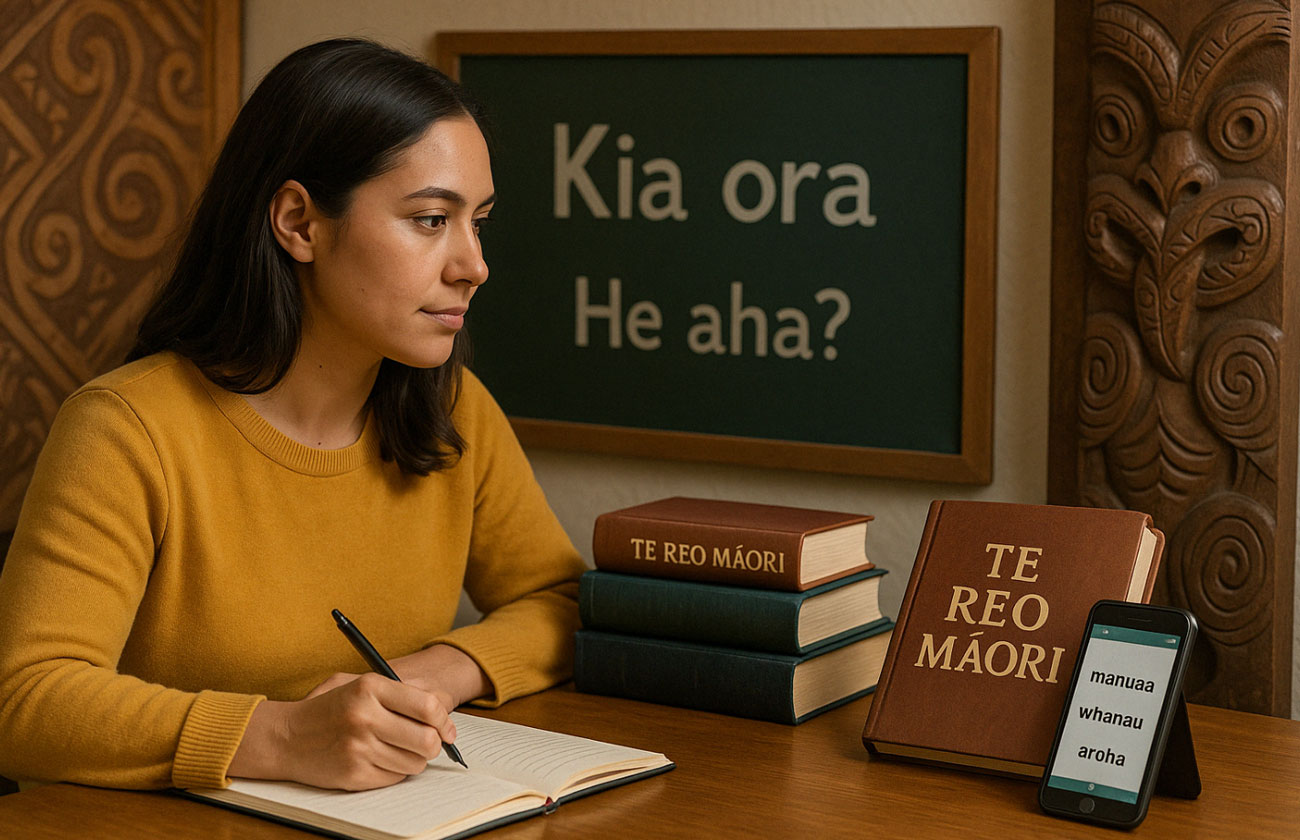
Start with small, consistent daily habits. Learning a few new māori words each day — greetings, simple phrases — and integrating them naturally into conversation or routine helps internalise the language over time. Repetition, writing words down, and practising pronunciation all support retention and fluency.
Couple this with listening — songs, radio, or video content in Te Reo — to attune your ear. Even simple exposure helps internalise rhythm, pronunciation, and structure. These practices make language learning manageable and sustainable.
Community learning: Language Week, Te Wiki o Te Reo and local classes
Participating in national events such as Te Wiki o Te Reo Māori (Māori Language Week) offers a supportive environment where learners and speakers alike celebrate Te Reo. Many communities and institutions run classes or events that welcome beginners — a great way to learn informally while connecting with others.
Community‑based learning helps embed Te Reo into daily life beyond the classroom, fostering real conversations and relationships grounded in shared cultural respect.
Apps, media and immersion: Māori television and conversational groups
Immersion remains one of the most effective ways to learn. Use Māori‑language media, join conversational groups, or watch television programmes broadcast in Te Reo to practise comprehension and speech in a natural way.
These tools offer more than vocabulary — they provide context, cultural reference and exposure to natural speech patterns. Over time, they help transform Te Reo from a studied language into a living one.
What laws and organisations support the Māori language in New Zealand?
Overview of the Māori Language Act and legal protections
The Māori Language Act 1987 formally recognised Te Reo as an official language of New Zealand, granting speakers legal rights — for example, to use Māori in court proceedings. This legislation affirmed the status of Te Reo as the language of the Māori people and acknowledged its value to the nation as a whole.
By enshrining the rights of Māori speakers in law, the Act laid a foundation for the language’s protection and revitalisation after decades of decline.
Role of Te Taura Whiri i Te Reo Māori and language‑act enforcement
Te Taura Whiri i Te Reo Māori was established under the Act to champion the language’s resurgence, offering guidance, certification and advice on policies to promote Te Reo’s daily use. In 2016, legislative updates renewed and reinforced the commitment to Te Reo as a taonga (treasure), further embedding responsibility for revitalisation between the Crown and Māori communities.
This framework ensures there is both institutional support and community oversight, lending strength and continuity to revitalisation efforts across generations.
Government programmes, language‑week initiatives and support for New Zealanders
National efforts such as Language Week, community funding, and Māori‑language media play a key role in normalising and promoting Te Reo throughout New Zealand. These programmes encourage both Māori and non‑Māori to learn and use Te Reo — strengthening its presence not only in homes but in workplaces, schools and public life.
By supporting language learning broadly, the government helps ensure Te Reo remains a living, shared aspect of New Zealand’s identity.
How can individuals and communities help sustain Te Reo Māori
Everyday actions: speak Māori, use Māori words and teach children
Incorporating even a few simple Māori words into daily conversation — greetings, common phrases — can make a difference. Encouraging children to learn and use Te Reo in the home helps revive intergenerational transmission, the bedrock of language preservation.
Such small but consistent practices keep the language alive, respected and relevant — turning Te Reo into a language of everyday life, not just ceremonies or education.
Community initiatives: Whiri i Te Reo Māori and local revitalisation projects
Community‑driven language initiatives — from local classes to whānau‑centred language efforts — play a vital role. Projects that bring people together around Te Reo revitalise not just language, but cultural connection, identity and community spirit.
Grass‑roots involvement ensures that efforts remain rooted in the values and lived experience of Māori people, strengthening ownership and long‑term commitment.
Celebrating language: participating in Māori Language Week and cultural events
Participating in events like Te Wiki o Te Reo Māori celebrates the language and its place in Aotearoa’s national identity. These celebrations raise awareness, foster pride and invite all New Zealanders to connect with Te Reo — highlighting that the language belongs to the nation, not just to Māori.
Such shared cultural experiences encourage appreciation and use of māori language in everyday life, reinforcing its vitality and relevance.
Conclusion
Te Reo Māori is far more than a collection of words. It is a living expression of identity, heritage and belonging for the Māori people — and a cultural treasure for all of Aotearoa. Its revival and growing acceptance demonstrate the enduring strength of Māori culture and the willingness of New Zealanders to honour that heritage.
If you value what Te Reo represents — community, identity, continuity — consider supporting efforts to keep it alive and thriving. Reo Ora stands as a symbol of hope and renewal; let it remind us that language is not just spoken, but lived.